Bearings
Angular Contact Bearings
Angular Contact Bearings
Quick Code: BB-496195
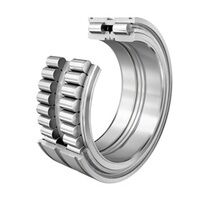
7209-B-XL-TVP-UA FAG Single Row Angular Contact Ball Bearing 45mm x 85mm x 19mm


Help Articles
Also Try

Tab Washers

Lock Nuts

Metric Oil Seals

Dunlop & Budget Ball Bearings

SKF Ball Bearings

Heat Shrink Tubing - Black & Red
Full Flow Ball Valve Cast Handle - Male x Female
Buy Now
Product Specification
Arrangement
Bearing pair with a low axial clearance in O- and X-arrangem
Brand
FAG
Cage
Polyamide cage
Clearance
Normal radial clearance
Contact angle
40 degree
Inside Dia
45mm
Material
Standard bearing steel
Outer ring
Without flange/groove
Outside Dia
85mm
Row Type
Single
Seal
None, open bearing
Temperature range
-20 to +120 °C
Tolerance class
Tolerance class P0/PN2 / ABEC 1
Width
19mm
Reference
7209-B-XL-TVP-UA
Additional Reference:
10024184
Quick Order Code
BB-496195
Product Description
7209-B-XL-TVP-UA FAG Single Row Angular Contact Ball Bearing
This compact single row angular contact ball bearing from FAG is engineered for high-speed, precision applications requiring simultaneous radial and axial load capacity. Featuring a 40-degree contact angle and robust construction, this bearing delivers reliable performance in demanding industrial environments while maintaining a compact footprint ideal for space-constrained applications.
Specifications:
- Bore Diameter: 45mm
- Outer Diameter: 85mm
- Width: 19mm
- Contact Angle: 40°
- Row Type: Single row
- Cage Material: Polyamide
- Clearance: Normal radial clearance
- Radial Clearance Arrangement: Low axial clearance in O- and X-arrangement
- Seal Type: Open bearing (unsealed)
- Material: Standard bearing steel
- Outer Ring: Without flange or groove
- Tolerance Class: P0/PN2 / ABEC 1
- Operating Temperature Range: -20°C to +120°C
- Brand: FAG
Ideal Applications:
- Electric motors and spindle applications
- Gearboxes and transmission systems
- Machine tool applications
- Pumps and compressors
- Automotive and industrial equipment
- Precision machinery requiring compact bearing solutions
This bearing is suitable for both standard and preloaded pair configurations with low axial clearance, making it versatile for various industrial applications where precision, reliability, and space efficiency are critical.